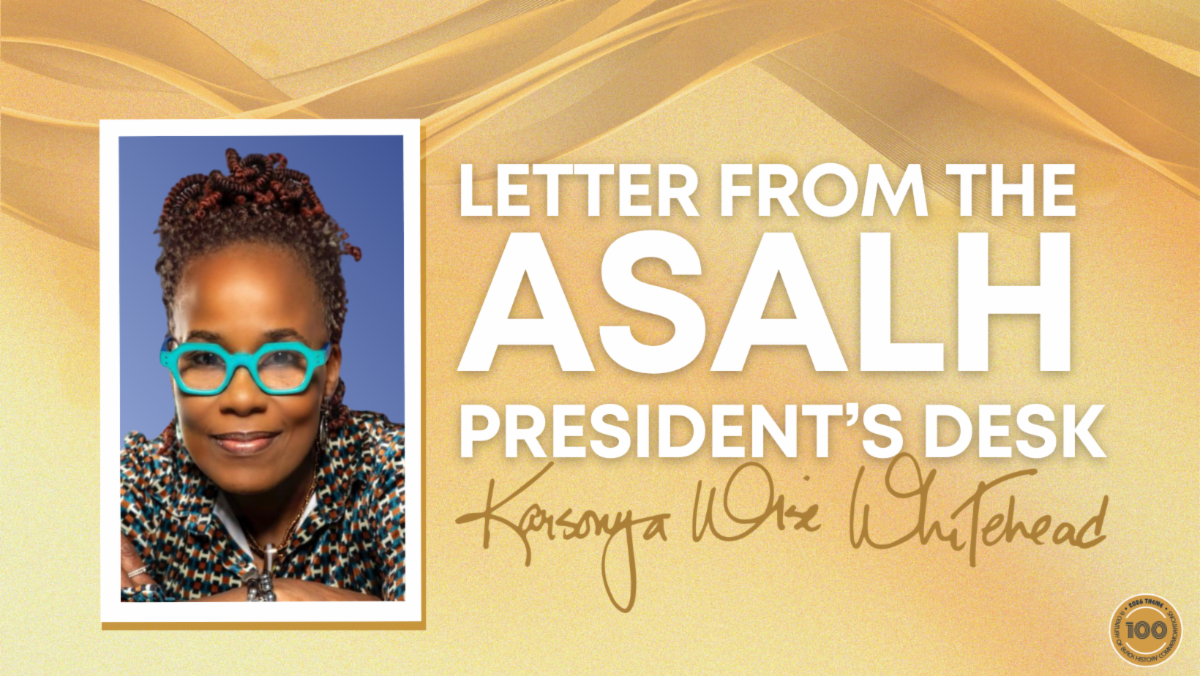
Southern trees bear strange fruit, blood on the leaves and blood at the root.
Earlier this month, a report was released that stated that since 2000, there have been at least seventy suspected modern-day lynchings across the deep South–in Texas, Mississippi, Georgia, Louisiana, Tennessee, and Alabama. They have been mostly written off as “self-inflicted,” but we know, our spirits know, unconsciously we know, as the whispers from the seeds of knowing harken back to yesterday. We know our history and our history matters. Dr. Carter Godson Woodson, the Father of Black History, wrote that the crusade to control the narrative and education of Black people was much more important than the anti-lynching movement, because there would be no lynching if it did not start in the classroom.
The work to control our narrative, to teach our history, and to properly educate our children, is more important than the anti-lynching movement. History matters. The teaching of our history matters. As someone who stands in the House of Woodson, who is out here trying to get into the type of trouble that would make my ancestors proud, and as a trained historian, I wrestle with this, but I do not deny it. You don’t get to be the Father of Black History if your research is not solid and your conclusions are not verifiable and generalizable.
Born in 1875, ten years after the end of slavery, Woodson was born in Buckingham County, Virginia, the son of James Henry and Anne Eliza Riddle Woodson, both of whom were born enslaved. James was a Civil War veteran–he ran away from slavery and joined with the Union soldiers–a carpenter, and a farmer. Anne was literate and taught her children to read. Woodson worked as a farm laborer and coal miner. It is incredible to think of his mother learning to read despite anti-literacy laws, and his father running away to claim his freedom.
He attended school in a one-room schoolhouse where he was taught by his uncle. He was already showing brilliance then, finishing four years of high school in two years. He went on to earn a BA from Berea in 1903. After teaching in the Philippines, he received a master’s in European history from the University of Chicago in 1908. But before that the story goes that he used to sit in the coal mines with his father and other Black veterans and listen to their stories of our history –so before Woodson studied European history he studied us. He learned our stories from those who had lived and survived them. Imagine sitting underground, away from listening ears, hearing the truth about slavery, the war, and this country. The seed planted in those mines was nurtured through his work to get his doctorate degree in History from Harvard in 1912—the first person of enslaved parents to receive a PhD in History and the second Black person to receive a PhD from Harvard.
You don’t get to become the Father of Black History lightly. It is not just because Woodson co-founded the Association for the Study of Negro Life and History in 1915 (along with Dr. George Cleveland Hall, MD; journalist Arthur Jackson II; economist James Stamps; attorney William Hartgrove Jr.); or that he helped to launch the Journal of Negro History (now the Journal of African American History) in 1916. It is not just because he launched Negro History Week in 1926 along with the Negro History Bulletin (now Black History Bulletin) and that he published four monographs, five text books, five edited collections, five sociological studies, and 13 articles. It is not because he pioneered in interpretations of slavery and Africa, or that his book The Miseducation of the Negro, published in 1933, is still in print and is still taught. It is because he loved us, he saw us, he centered us, he celebrated us, he focused on us, he told our stories, preserved our history, and challenged us. He is the one, the true historian and lover of Black History, whom we are all chasing after.
And that leads me to us and what we should be doing. Our work as the Ambassadors of ASALH and keepers of Woodson’s legacy should be seen as labors of love, testaments to the power of memory, challenges to misinterpreted texts, shields against false narratives, a mirror held up to the world, and a letter that is being written to future generations.
Dr. Carter G. Woodson wrote, “History shows that it does not matter who is in power or what Revolutionary forces take over the government; those who have not learned to do for themselves and have to depend solely on others never obtain any more rights or privileges in the end than they had in the beginning.” ASALH has been and is doing that work – telling our story – teaching our history – making sure that when the lies are told, the truth gets lifted up. That work, I would argue, is the work.
On this 25th Day of Black History, I challenge you to join me and make the commitment to run after Dr. Woodson, pick up his mantle, and do the good work of protecting, promoting, and preserving Black history.
Bending toward social justice,
Karsonya Wise Whitehead
|
|